
Silverstone 2026
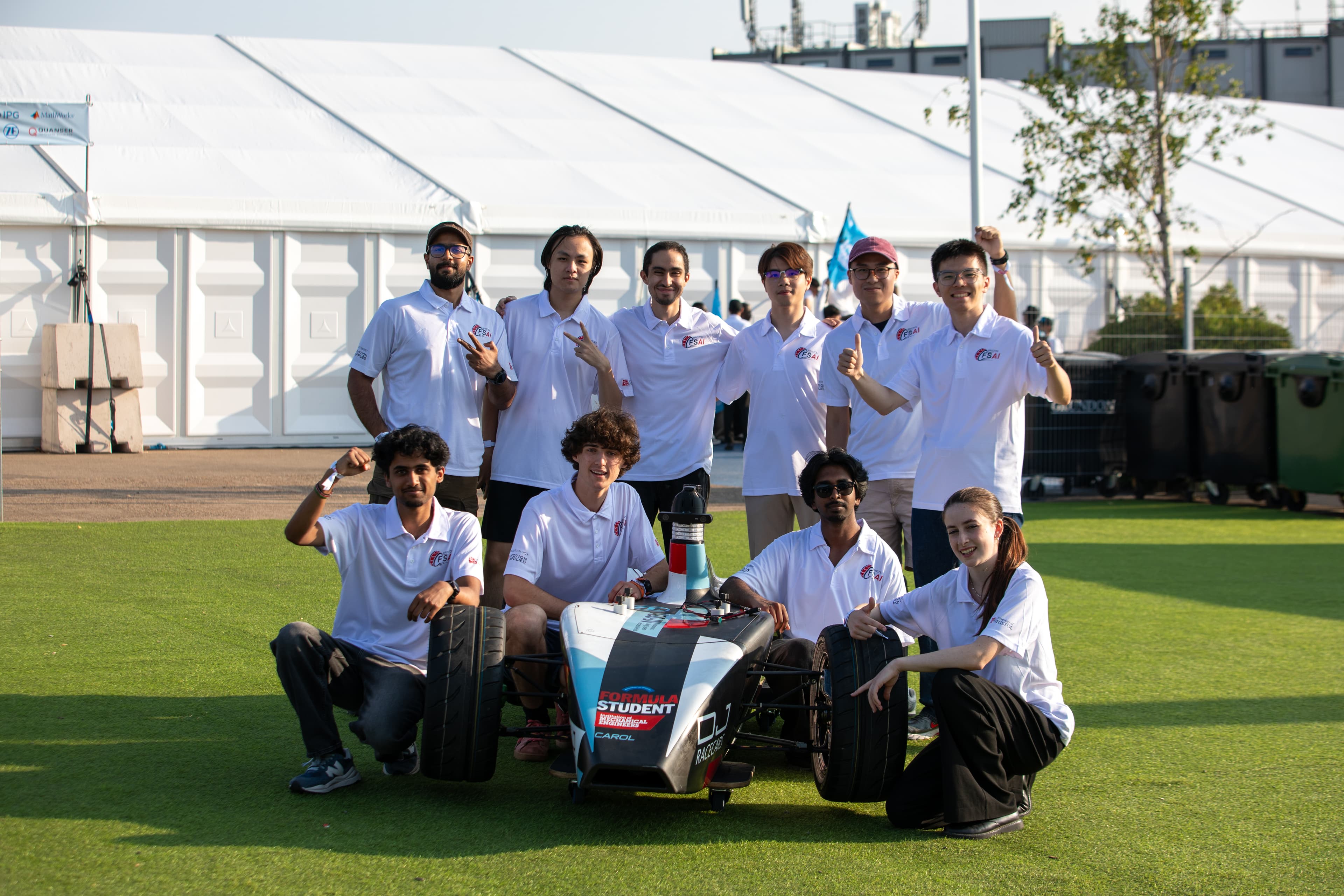
It was the first morning of Formula Student 2026. The sun was out, the roar of the cars on the track was deafening, and the air smelt of asphalt. And before FSAI registration was even open, we'd arrived - we were back, and we were ready for our second year.
Travel
Over 2026, FSAI's autonomous driving improved a lot. Unfortunately this was not true for human driving, where we went from two drivers to one, despite three more people coming to competition.
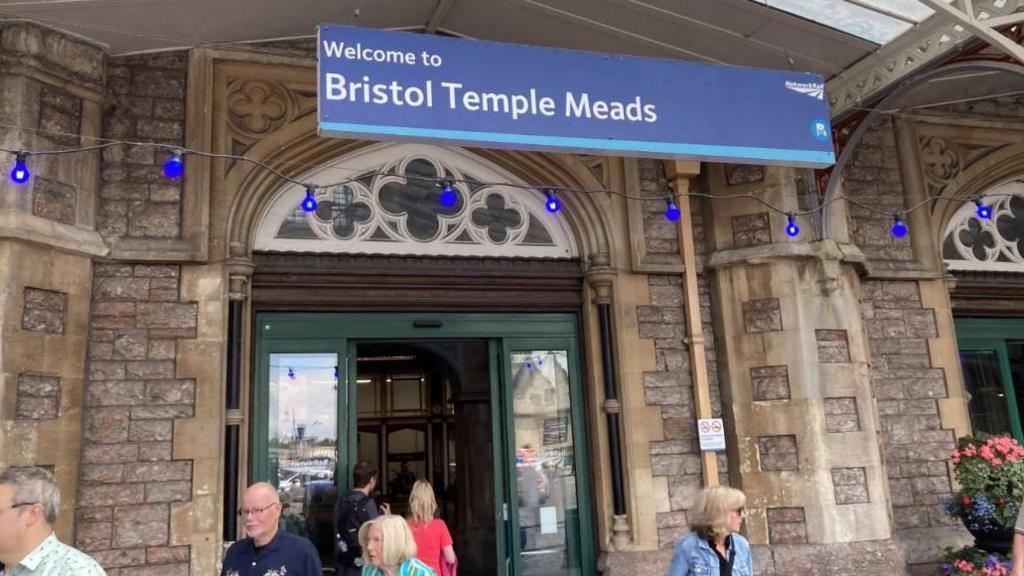
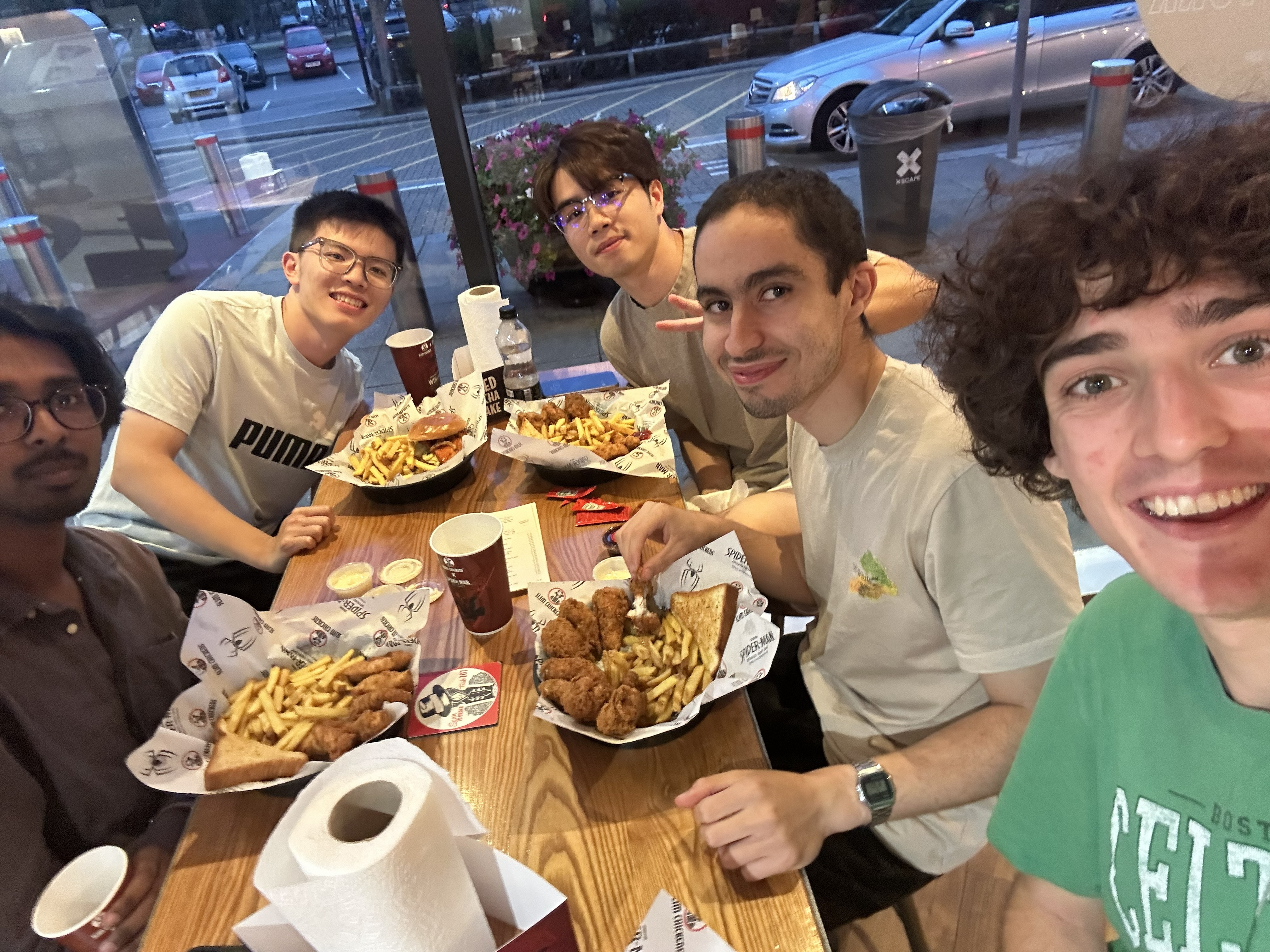
It was a very tightly packed VW Up, but by Tuesday, we all had made it to the AirBnB. We even managed a trip to Sainsbury's to buy pizza/pasta/cereal/Monsters to keep us going, but there was no time to be distracted by the breathtaking majesty of Milton Keynes - the first day of Formula Student was soon upon us.
Arriving at Silverstone
The atmosphere at Silverstone was very different to anywhere else I'd been. From the moment you walk through the gates, you're deafened by cars screaming around the track, and the air smells of oil and rubber.
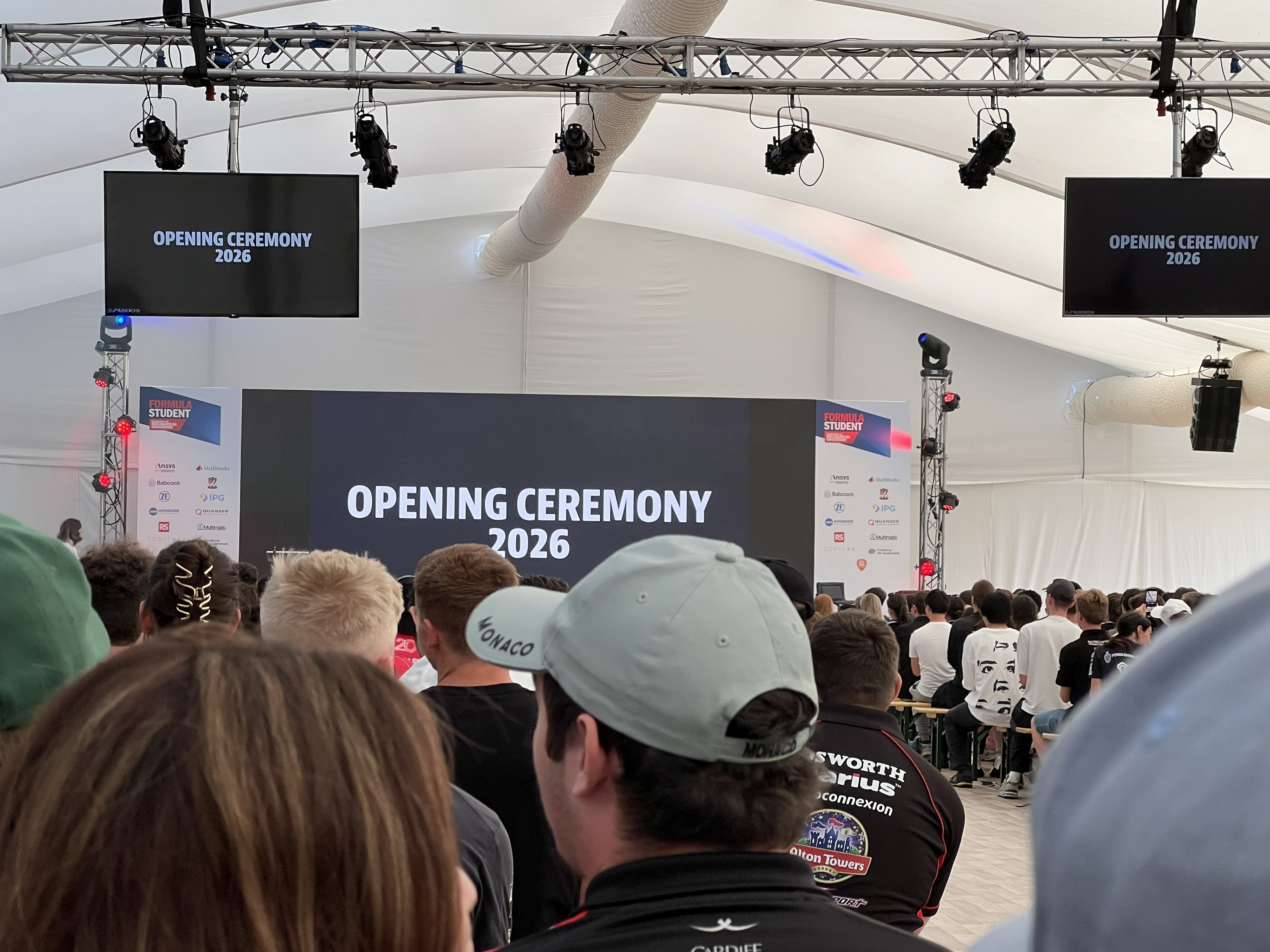
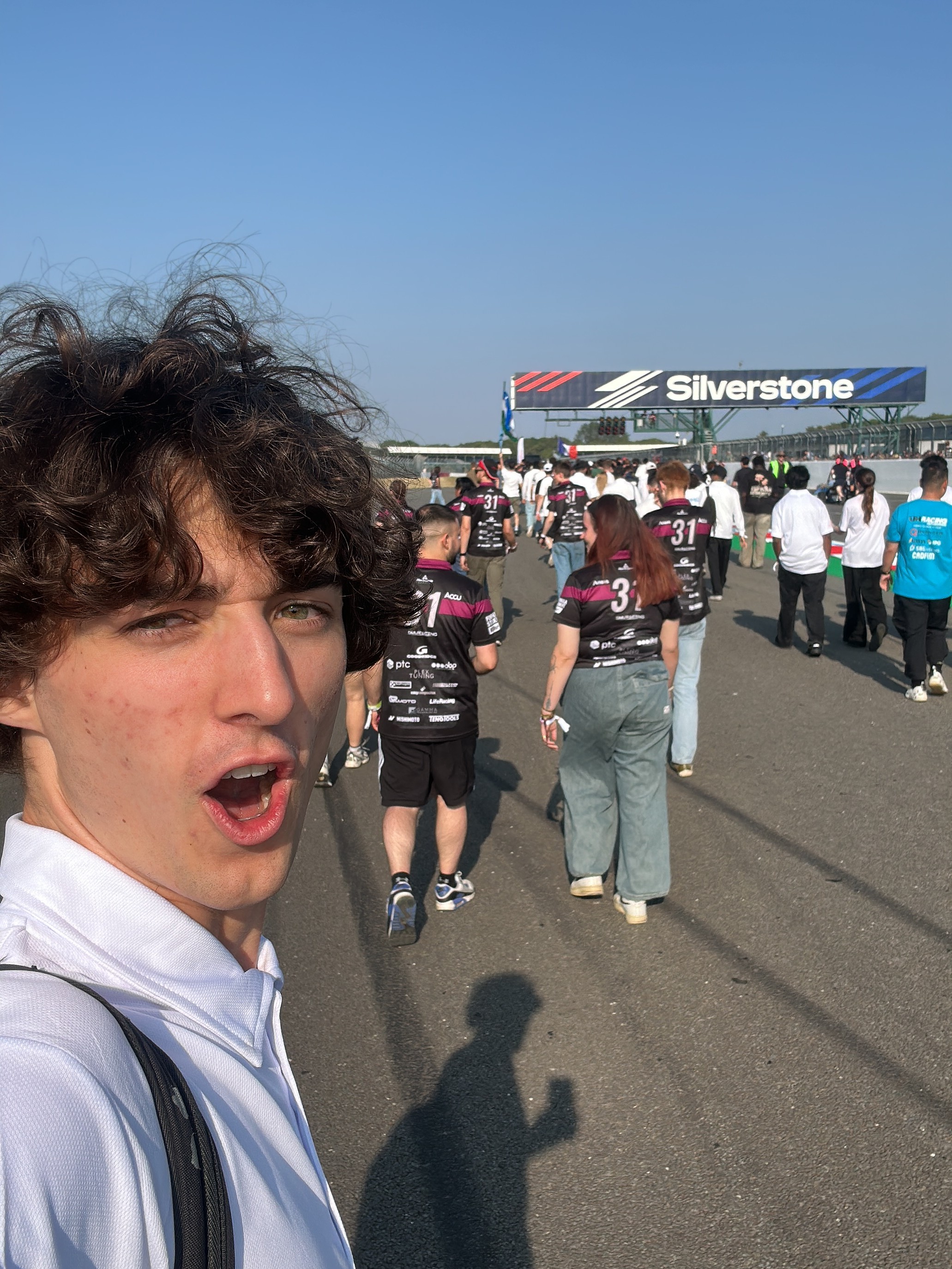
There's always lots going on around you, and there's an air of focus and competitiveness to most of the people you see. Everyone is very nice, though, and there are very good hot dogs (if a little overpriced) at the paddock.
Dynamic Driving Task (DDT): Scrutineering
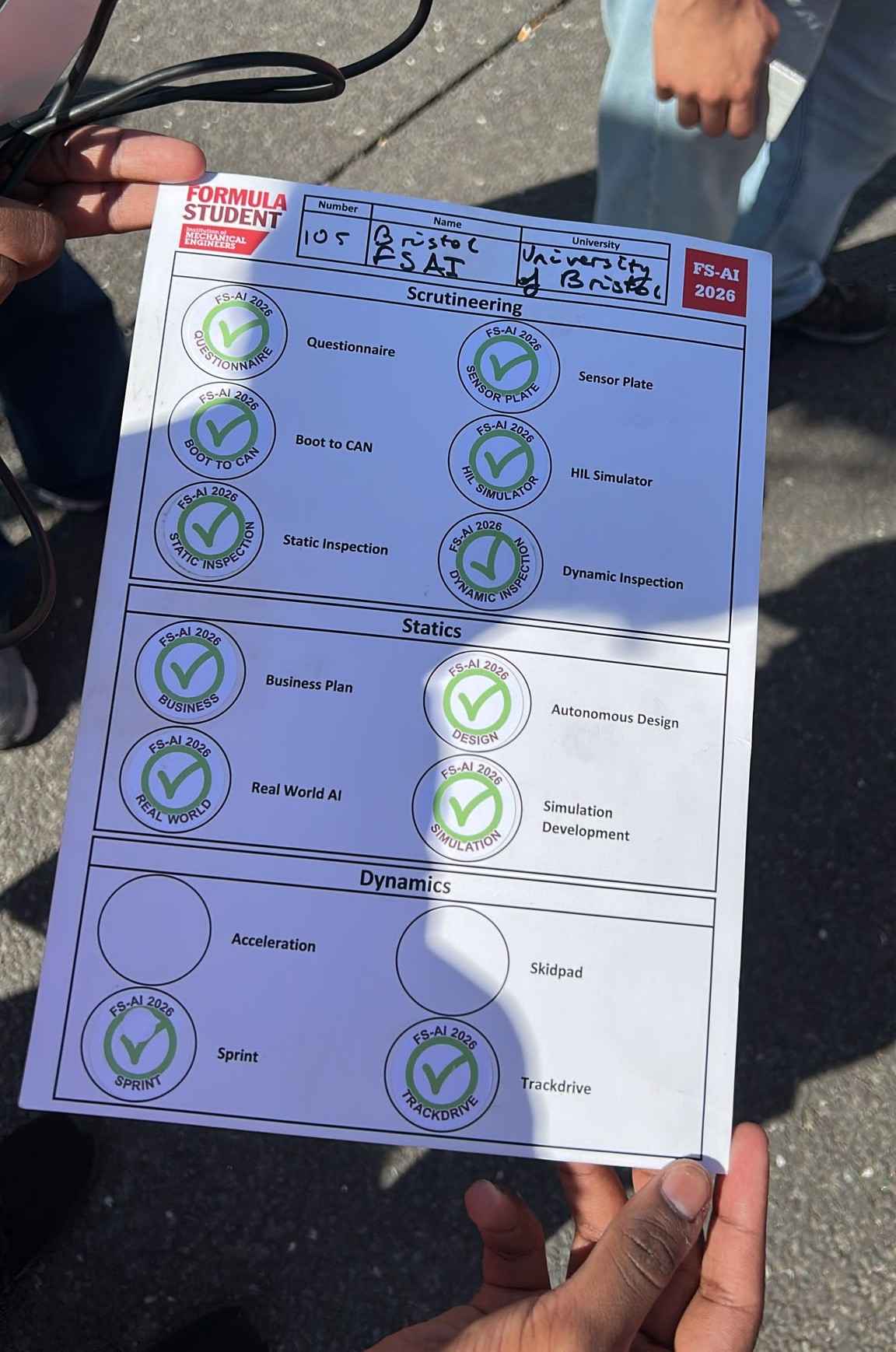
Our first objective was to pass DDT scrutineering. This involves showing that you can get the car's wheels to turn and have it execute simple maneuvers without triggering the very easy-to-trigger emergency brake. Even though we'd already tested on the car, getting our system to run was difficult, and we had plenty of bugs to fix.
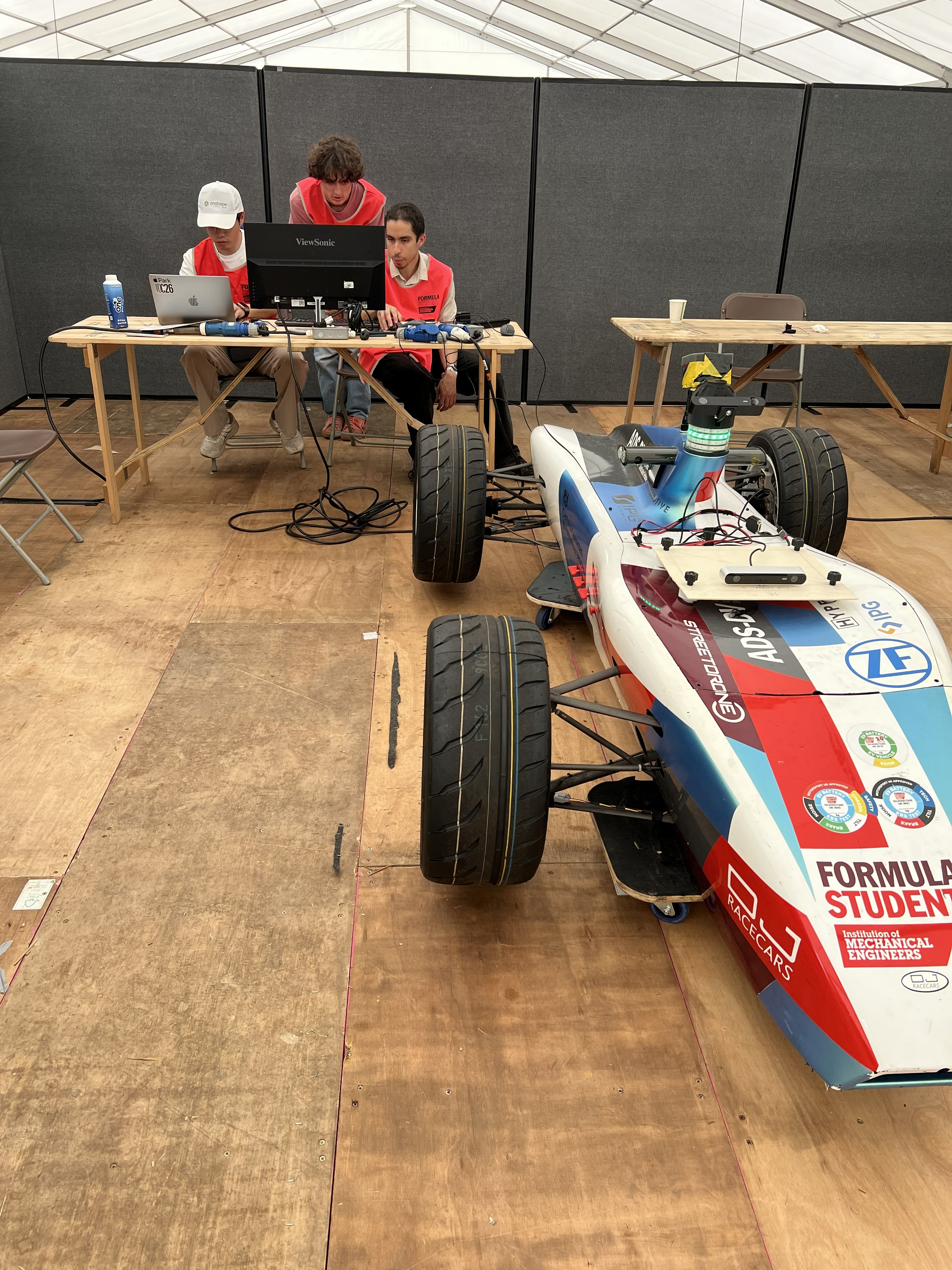
The coding tent was where we did most of our work over the first couple of days.
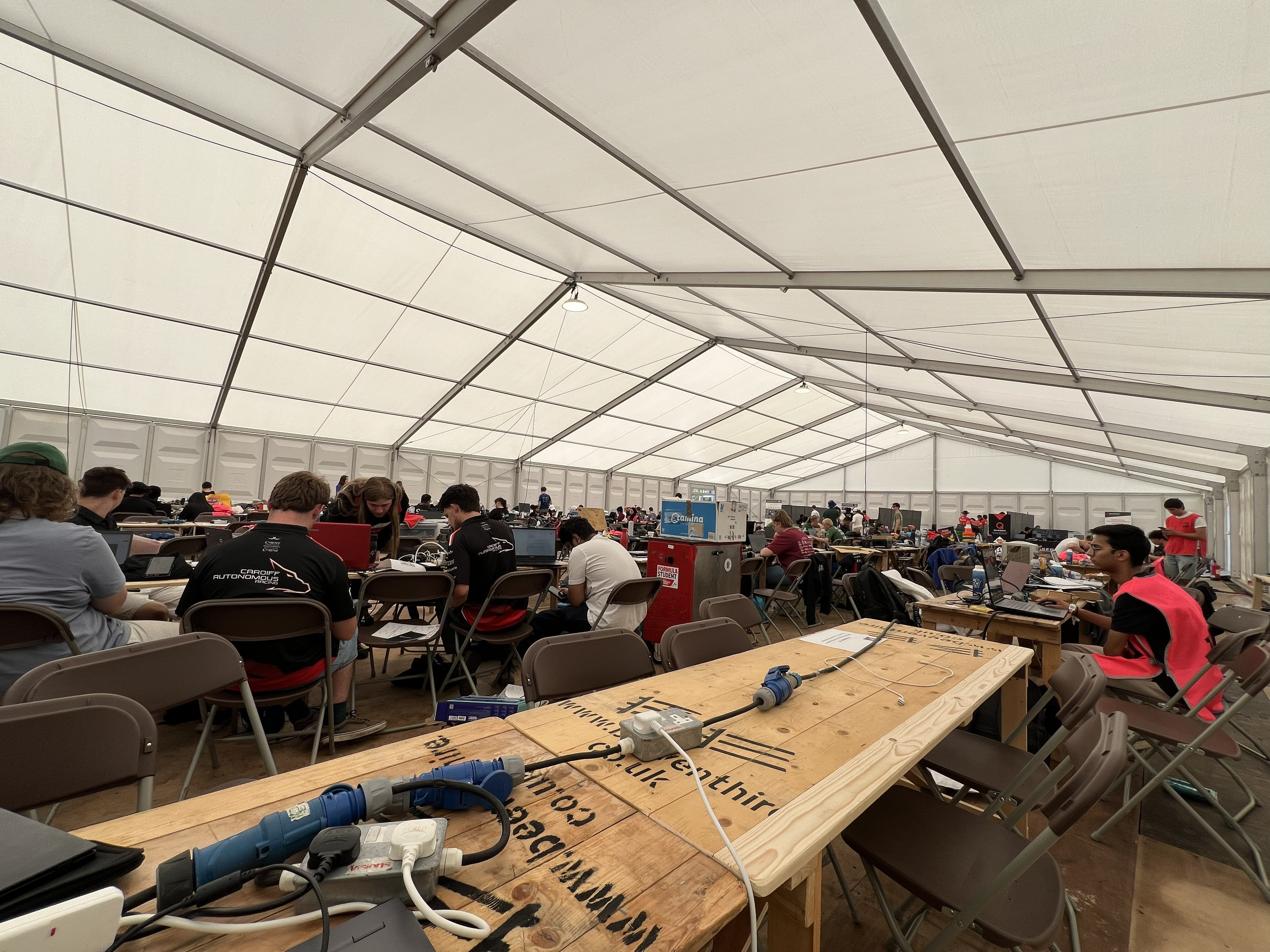
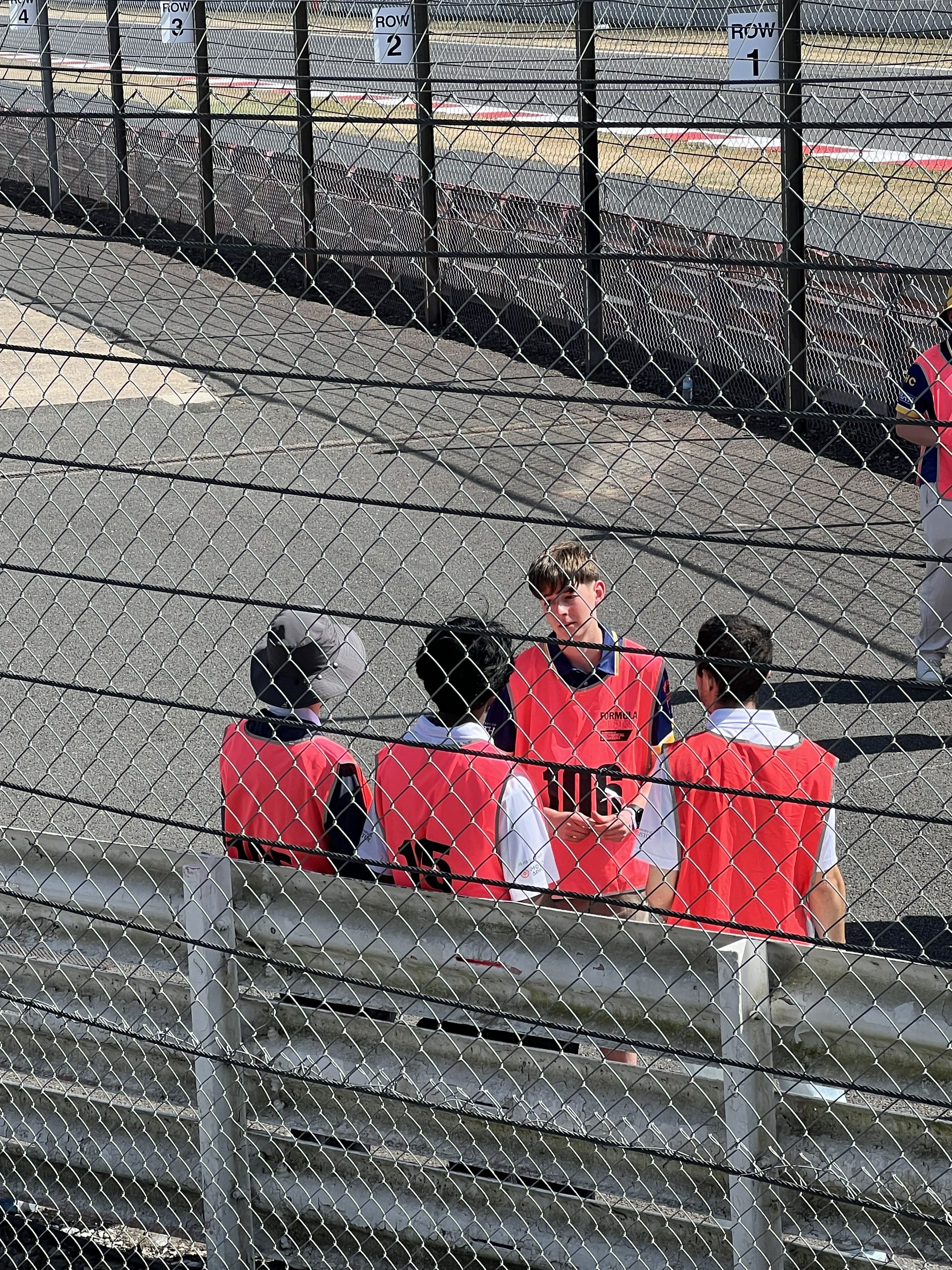
Every team had a table, and teams were very different - some were big teams with shirts covered in sponsorship logos, some were just a few friends, some brought in 9-packs of Red Bull every day, and there was one team who would wheel around a large PC mounted in a shopping trolley so that they could use it for training.
We were happy to get a spot next to Bath FSAI. They were great allies to us throughout the year - they had many more years of experience than us, but were nevertheless always happy to give us advice and show us how to do things.
DDT: Dynamic Events
After passing scrutineering on the simulator, and then on the real car, we were able to enter dynamic events. In between, we made use of the valuable opportunities to test on the ADS-DVs.
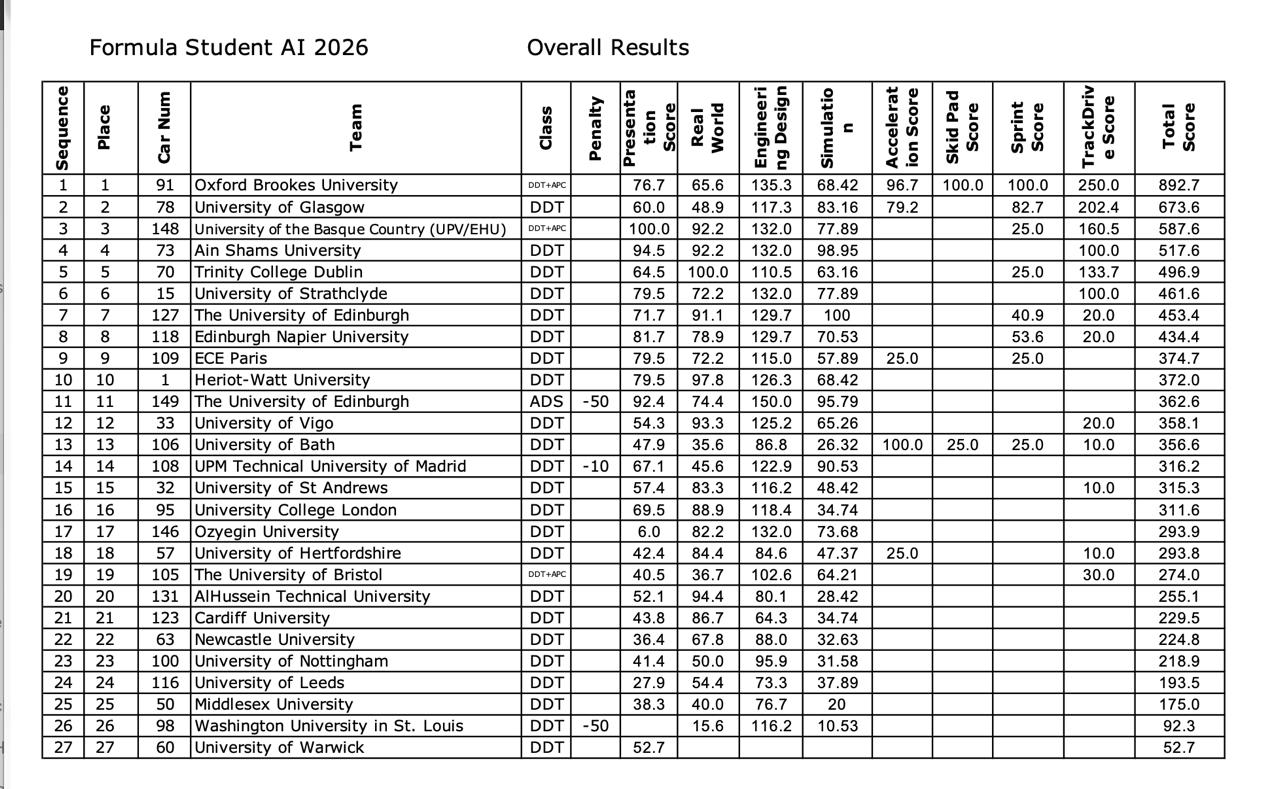
In the end, we earned 30 points for our four laps of the track, putting us in 7th for trackdrive. We estimate we could have earned just under 100, as the system was navigating the track successfully every time, but we were prematurely cut off as the time allocated for the event was nearly up and other teams wanted one last attempt before then. If we'd been earlier in the queue, we probably would have placed in the top 5!
Also, we learned so much during the week that our system on Sunday would have earned lots of points in the earlier events, but the window for them was over. Next year, though, we'll be starting from a system that can complete every event (albeit slowly), so we are excited to see how far we can take it.
Autonomous Platform Cup (APC)
Our APC team had worked hard to design an autonomous system built on a chassis UWE had agreed to give us for 2027's competition. Mithun and the subteam leads presented slides and a CAD model in the Autonomous System Design presentation, and received both very positive feedback and lots of useful advice for next year.
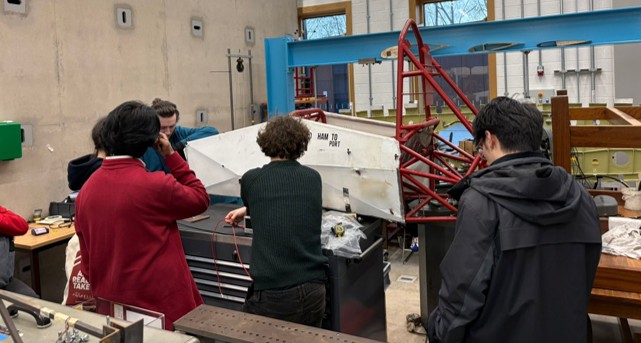
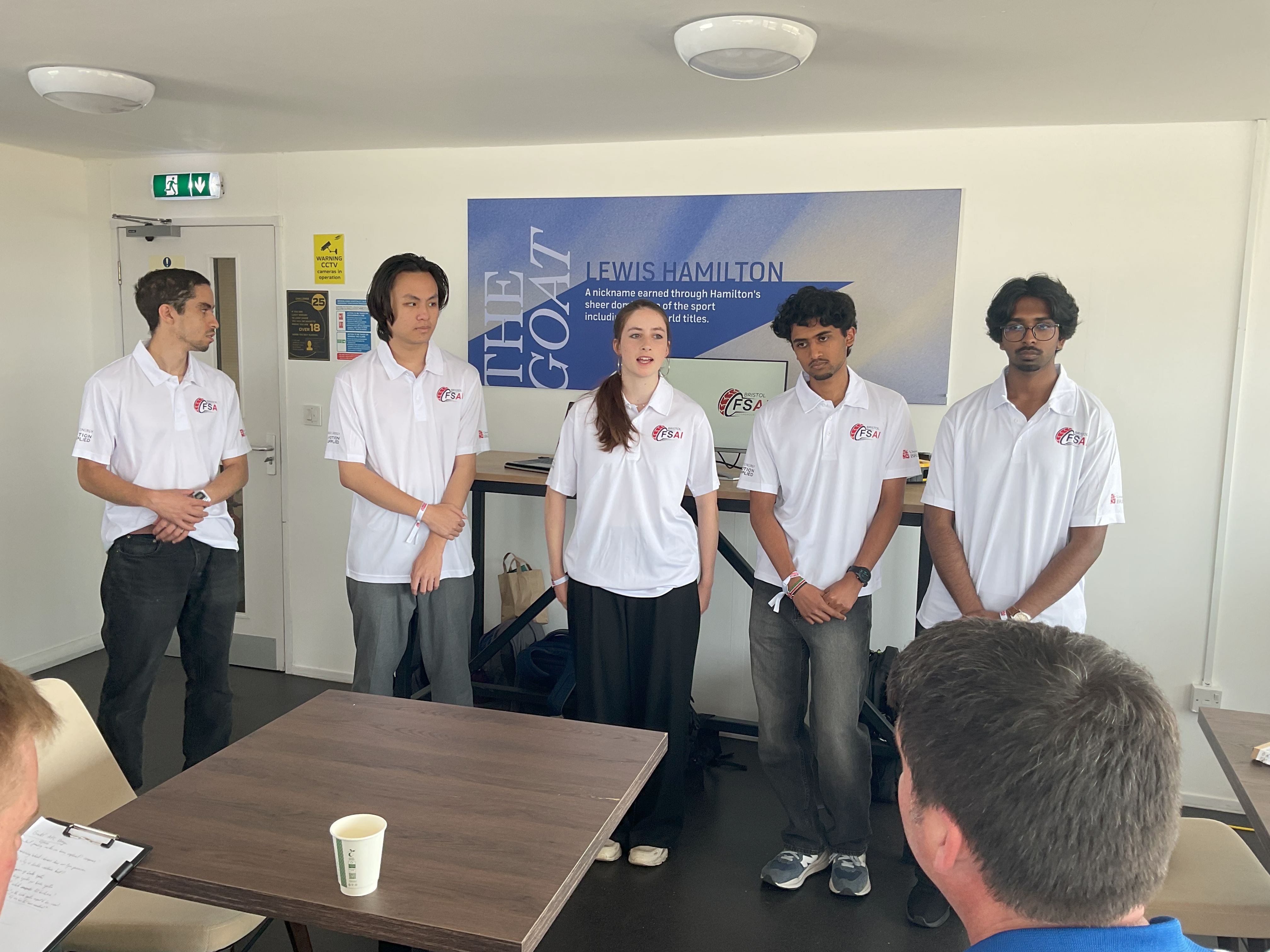
Since it was the first year of APC, only two universities had entered APC with a physical car, but we couldn't compete with them. We were expecting a battle with two other concept entries for third place, but clearly they'd heard that we were in the running as they both conceded gracefully before the week started. The first of many podium finishes!
DDT: Static Events
The static events were a really good opportunity to talk properly to the judges and to get feedback.
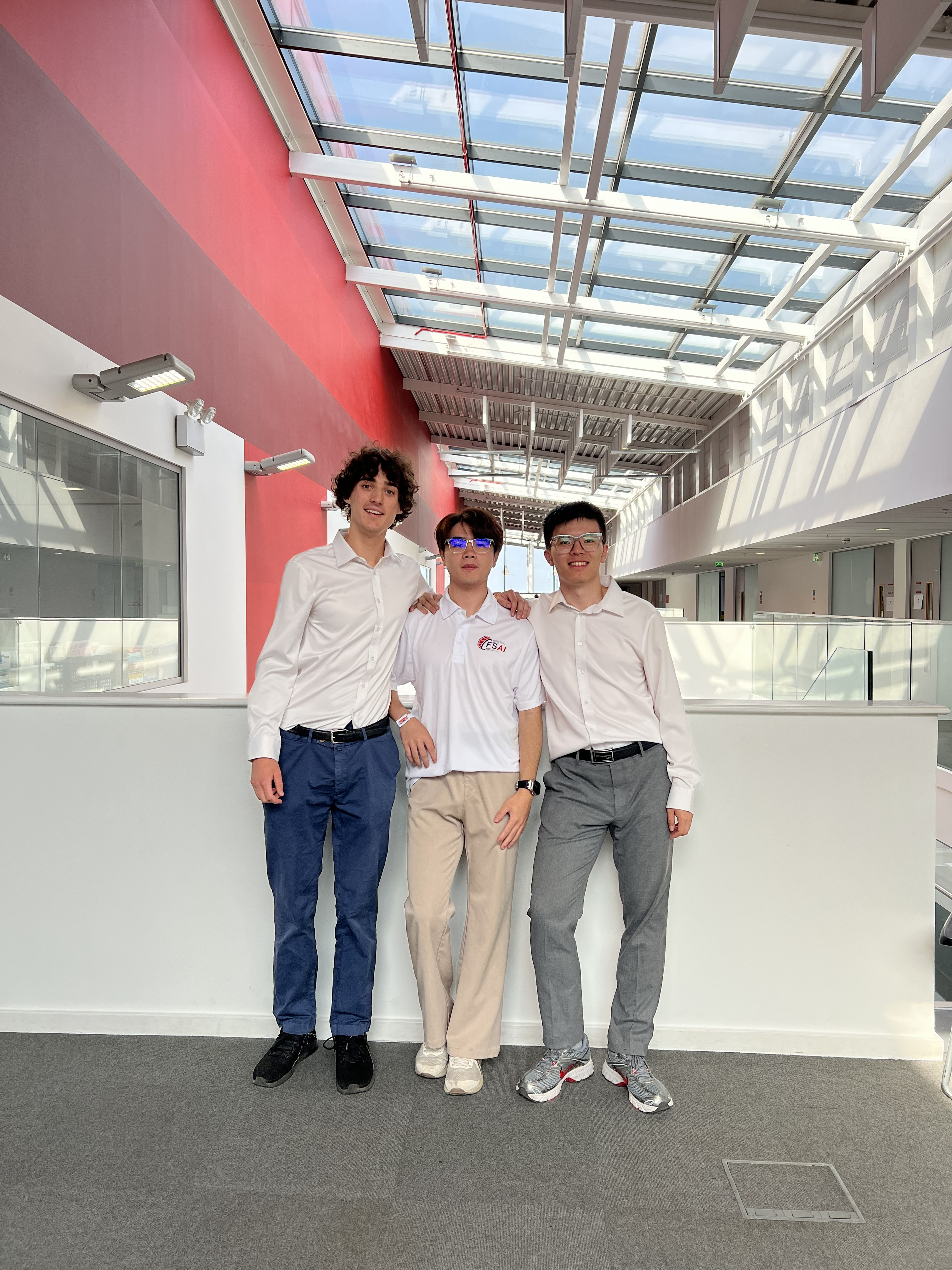
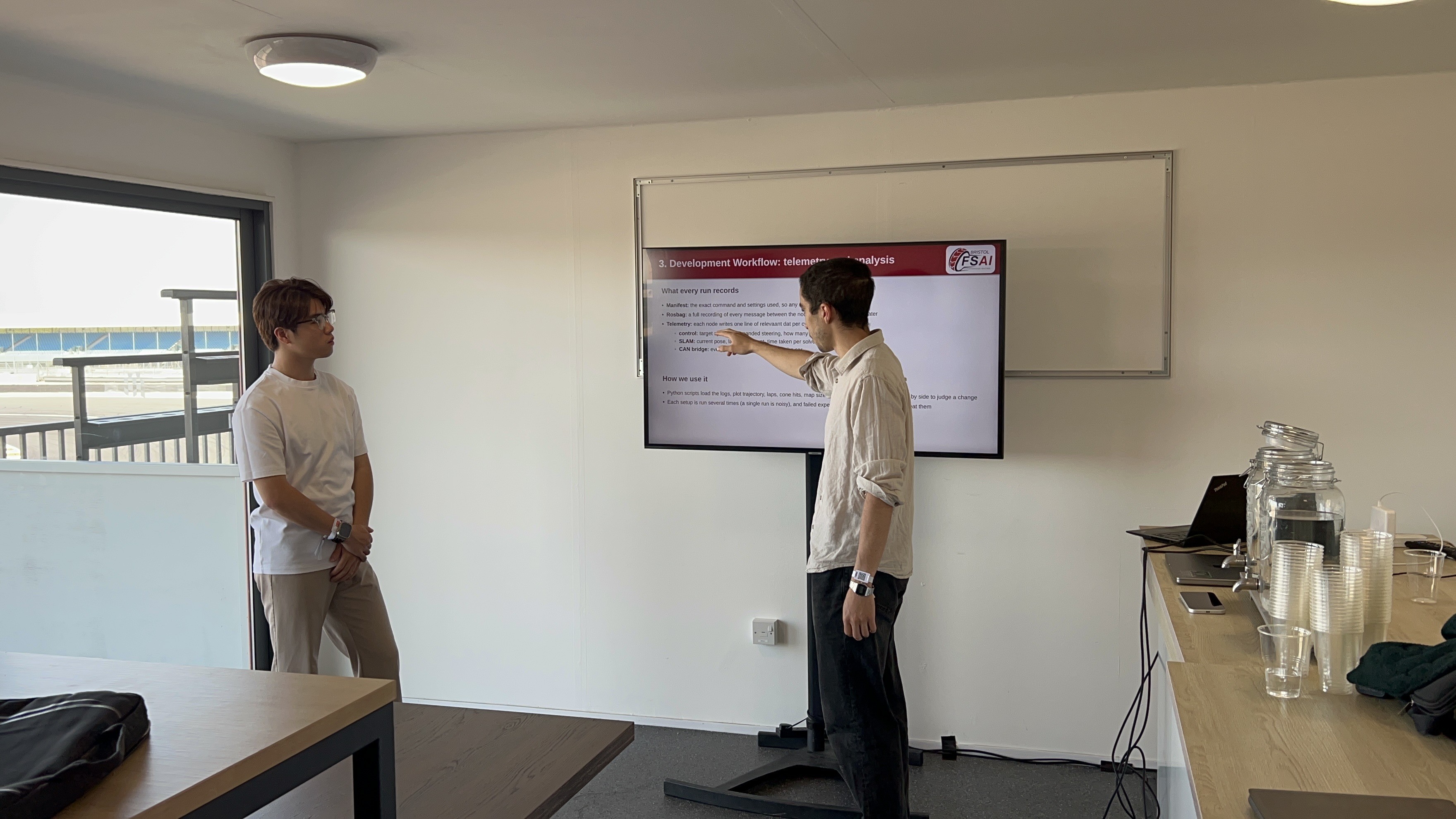
We unfortunately couldn't replicate our stellar presentation performances from last year. Most of our presentations went well, but the judges didn't like our Real World AI presentation (which Jerry and I gave - sorry about that, everyone) at all, and since most teams received good scores for it, our overall ranking took a big hit.
Reflections
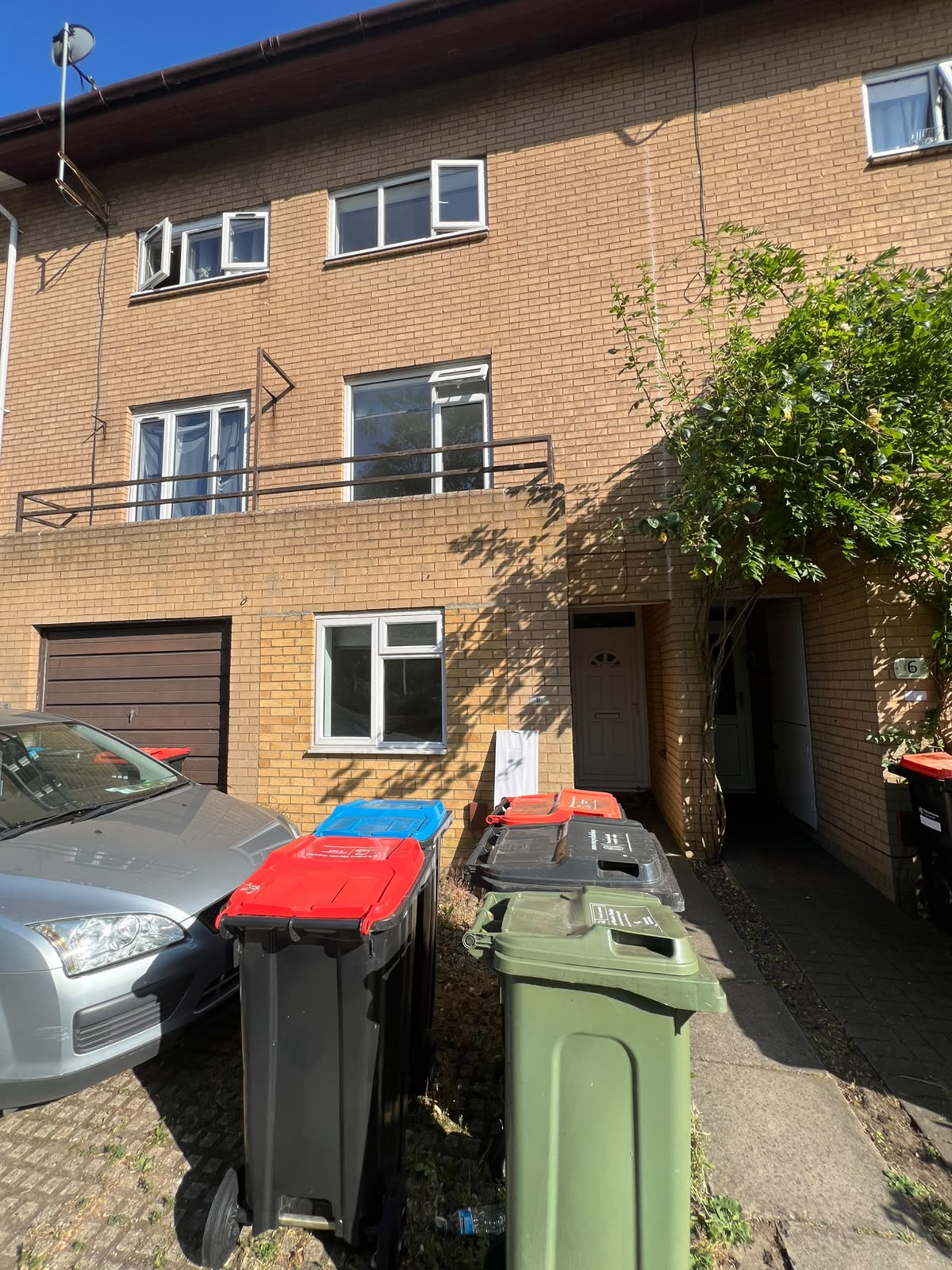
I wasn't part of the society at the 2025 competition, so this was my first time. Nevertheless, I'd heard tales about the 2025 campsite - rain, cold showers, a lack of plug sockets, and no easy way to get food. Luckily, my team members had learned from the experience, and the AirBnB we booked was warm, dry, equipped with a kitchen and good WiFi, and somehow cheaper than the extortionate campsite slots.
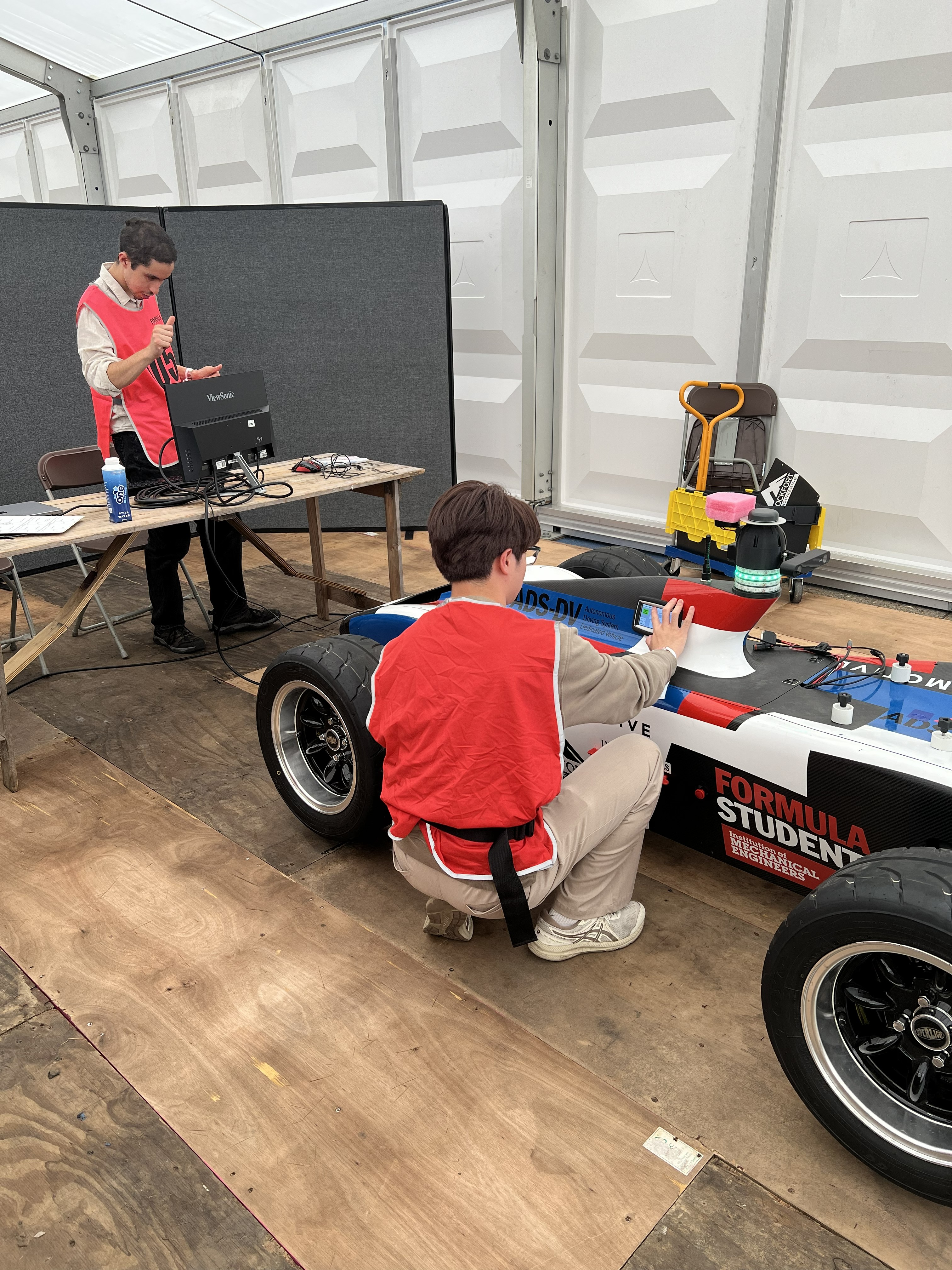
Despite my pessimism, Claude was invaluable in quickly addressing bugs (despite occasionally hiding a few lines of AI slop deep in the codebase) and our testing before the competition meant we'd already got past several hurdles.
Perhaps the most frustrating challenge was the ADS-DV's USB hub. We'd been warned that it was unreliable, but this was an understatement. It in fact never worked. It was with a heavy heart that we admitted, after days of trying to get the inbuilt camera working, that perhaps they had forgotten to plug it in.
Overall, though, it was a great experience. Our evenings would be divided between coding and watching World Cup matches, and we got on really well as a team. There were points when things weren't working and it got a bit stressful, but we were so pleased to get some laps done in the end.
Thank you very much to everyone, including those who couldn't make it to the event, for being a great team and awesome people to work with.
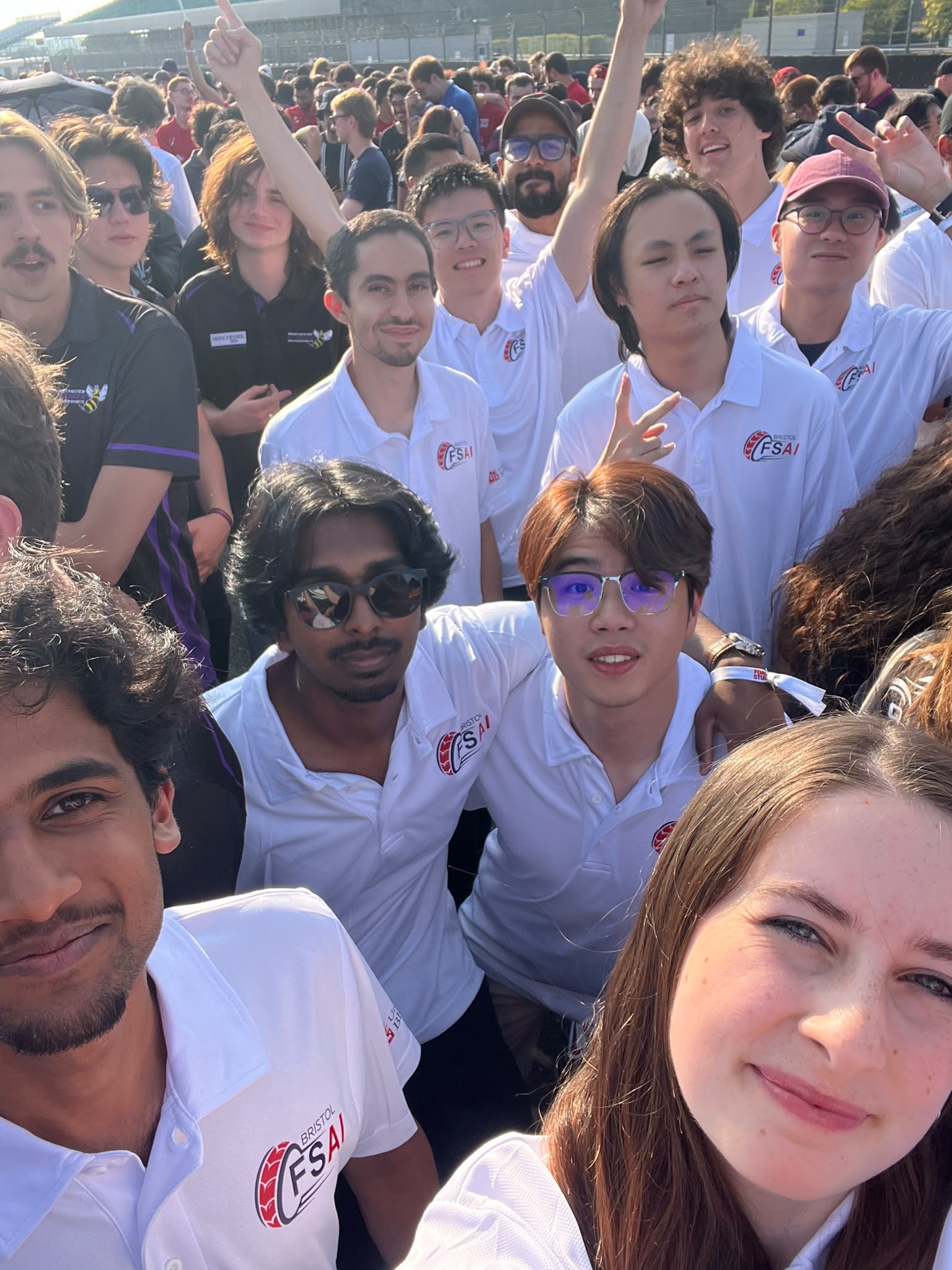
On to FSAI 2027! 🏎️